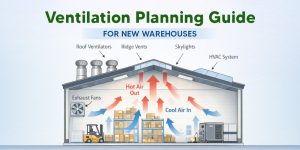
Proper ventilation goes beyond just moving air; it is essential for a safe, healthy, and productive indoor environment, particularly in industrial settings. It plays a key role in managing air quality, preventing mold growth, and ensuring the health and well-being of workers. This article explores the main factors that affect industrial ventilation, including the trade-offs and challenges, with a focus on the needs of manufacturers and suppliers in the Middle East and Vietnam.
The Key Functions of Industrial Ventilation
- Dilution and Removal of Contaminants: Industrial processes frequently produce harmful airborne substances, such as dust, fumes, gases, and chemical vapors. Ventilation dilutes the concentration of these contaminants to safe levels and removes them from the workspace, reducing worker exposure.
- Humidity and Temperature Control: High humidity creates ideal conditions for mold and mildew. Proper ventilation removes humid air, which is especially important in hot, humid climates like those in the Middle East and Vietnam. It also helps control temperatures, preventing heat stress and creating a more comfortable and productive working environment.
- Maintaining Indoor Air Quality (IAQ): In addition to removing specific pollutants, ventilation provides a constant supply of fresh outdoor air. This prevents the buildup of carbon dioxide (CO₂) and other stale air components that can cause symptoms associated with “sick building syndrome,” such as fatigue, headaches, and poor concentration.
Key Industrial Ventilation Solutions and Their Trade-offs
Industrial facilities have various options for ventilation, each with its own advantages and challenges. Choosing a system often involves balancing performance, cost, and energy efficiency.
- Industrial Roof Ventilators: These systems, including natural and powered models, are a common choice for large, open industrial spaces.
- Natural Ventilators: Solutions like ridge ventilators in Qatar and other suppliers in the GCC use wind and the natural buoyancy of warm air to draw stale air out of a building. They are eco-friendly roof ventilation solutions with no running costs. However, their performance depends on external conditions, which may not be effective in environments with high contaminant levels or little wind.
- Powered Ventilators: These use electric fans to actively exhaust air. While they are more effective at moving large volumes of air and managing specific pollutants, they consume electricity, leading to higher operational costs. These are often the go-to solution for ventilation systems in factories where precise control is critical.
- Local Exhaust Ventilation (LEV): This approach captures pollutants at their source before they spread into the workspace.
- Benefits: LEV systems protect worker health by preventing exposure to hazardous materials. They are vital in industrial ventilation systems in Vietnam and other manufacturing areas where specific processes produce fumes or dust.
- Challenges and Trade-offs: The main challenge is that LEV systems must be custom-designed for specific processes, which can be expensive and complex. They also require regular maintenance to keep filters and ducts clear. While they effectively handle local pollutants, they do not address air quality issues for the entire facility.
- Energy Recovery Ventilation (ERV) Units: These systems are becoming increasingly important for ventilation solutions in GCC countries and other regions with high energy costs.
- Benefits: ERVs transfer heat and moisture between incoming and outgoing air streams. This significantly cuts down the energy needed to cool or heat incoming air, resulting in substantial savings. For roof ventilator suppliers in Dubai and other manufacturers in the Middle East, offering ERV solutions is a key competitive edge due to the region’s hot climate.
- Challenges and Trade-offs: ERV systems usually have a higher initial cost and require more complex installation than simpler setups. However, they provide significant long-term energy savings and contribute to a more sustainable operation.
Challenges and the Importance of a Holistic Approach
In Vietnam: The hot and humid climate combined with rapid industrialization and a high density of factories creates a demand for robust and reliable systems. Challenges in industrial ventilation systems in Vietnam often involve finding cost-effective solutions that also meet the needs of high-performance systems to protect a large workforce and comply with changing environmental regulations.
The most effective strategy is not to select a single solution but to design a comprehensive system that combines various technologies. This may involve a foundation of natural industrial roof ventilators, paired with targeted LEV systems for specific processes and energy-efficient ERV units to maintain overall air quality and climate control. The decision-making process should emphasize the importance of worker health and safety, not only capital and operational costs. By prioritizing workforce well-being, companies can enhance productivity, reduce sick days, and create a safer, more sustainable working environment.