For large commercial buildings, hospitals, hotels, malls, factories, and high-rise complexes, energy consumption is one of the biggest operating expenses. While heating, cooling, and lighting systems get the most attention, one factor often overlooked—but extremely powerful—is ventilation.
At Riseecovent, we have spent years delivering innovative, sustainable ventilation solutions across India, UAE, Thailand, Singapore, Malaysia, Indonesia, Vietnam, Cambodia, and other Asian markets. Our experience shows a clear pattern:
Better ventilation = lower energy bills + healthier indoor environments.
This blog explains how proper ventilation directly reduces energy costs and why large buildings must prioritize advanced air-management solutions.
1. Reduced Load on HVAC Systems
When indoor air becomes stale or humid, HVAC units must work harder to maintain the desired temperature. Poor ventilation traps heat, moisture, odors, and pollutants inside a building.
A well-designed ventilation system:
- Continuously removes heat load.
- Maintains balanced humidity.
- Reduces hot spots and uneven temperatures.
- Lowers the workload on chillers and AC units
This directly results in lower electricity consumption and longer equipment life.
In our projects across the UAE and Singapore, clients saw up to 20–28% reduction in cooling energy usage after adopting modern mechanical ventilation system
2. Energy Recovery Ventilation Saves Power
Modern buildings are adopting Energy Recovery Ventilators (ERVs) and Heat Recovery Ventilators (HRVs)—a field where Rise EcoVent is strongly positioned.
These systems:
- Recover up to 70–85% of energy from outgoing air
- Pre-cool or pre-heat incoming fresh air
- Reduce the overall air-conditioning load
Result:
Significant reduction in monthly energy bills without sacrificing indoor air quality.
This method is especially beneficial in regions like Dubai, Malaysia, and India, where temperature differences between indoor and outdoor air are large.
3. Smart Ventilation Eliminates Over-Ventilation (A Major Energy Waste)
Many buildings still run ventilation fans at full speed all day, even when occupancy is low.
Rise EcoVent’s smart ventilation designs use:
- CO₂ sensors
- Occupancy sensors
- Variable Frequency Drives (VFDs)
- Automated dampers
These technologies adjust airflow only when needed, preventing energy waste.
For example, large warehouses and shopping malls can save 15–30% simply by switching to demand-based ventilation.
4. Improved Airflow Keeps Indoor Temperatures Stable
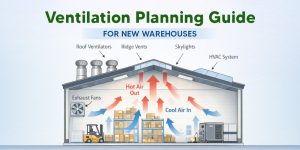
Hot air naturally rises, but without good ventilation, it becomes trapped around ceilings and walls. This forces cooling units to work harder.
Well-planned ducting and air movement:
- Maintains uniform temperature/
- Prevents heat build-up.
- Increases cooling efficiency
Our high-performance ventilation systems installed in factories and industrial plants have shown dramatic improvements in temperature stability—especially during peak summer months in India and Southeast Asia.
5. Lowers Moisture Levels and Prevents Mold Growth
Moisture is one of the biggest hidden threats in large buildings. Humidity increases cooling needs and damages insulation, electrical equipment, carpets, and wall paint.
Effective ventilation:
- Removes humidity
- Prevents condensation
- Protects insulation efficiency
- Reduces the need for air dryers or dehumidifiers
This leads to energy savings and major maintenance cost reductions.
6. Enhances Indoor Air Quality → Better Productivity → Energy Gains
Poor air quality leads to discomfort, headaches, and poor productivity—especially in office buildings, hospitals, and malls.
Good ventilation:
- Provides fresh oxygen.
- Removes VOCs and indoor pollutants.
- Keeps CO₂ levels under control.
With healthier indoor air, occupants feel more comfortable at slightly higher temperatures, reducing overuse of air conditioning.
Even a 1°C increase in thermostat setpoint can reduce cooling costs by 5–7%.
7. Long-Term Cost Savings with EcoVent Solutions
Rise EcoVent systems are engineered for:
- Minimal maintenance
- Low energy consumption
- Long operational life
- High airflow efficiency
From large corporate offices in India to manufacturing units in Vietnam and hotels in Dubai, our clients consistently benefit from lower energy bills and healthier indoor environments.
Energy savings aren’t just a short-term benefit—they continue year after year.
Conclusion
Good ventilation isn’t just about fresh air—it’s a smart energy-saving strategy. For large buildings, industrial plants, and commercial spaces, upgrading ventilation systems can lead to reduced power bills, better HVAC efficiency, and improved indoor comfort.
Rise EcoVent specializes in delivering world-class ventilation solutions designed for the climate challenges of Asia, GCC nations, and Southeast Asia.
If you’re planning to upgrade or design a ventilation system, our experts can help you create the most energy-efficient airflow solution for your building.
Want an Energy-Saving Ventilation Plan for Your Building?
Contact Riseecovent
Serving: UAE, Thailand, India, Singapore, Indonesia, Malaysia, Vietnam, Cambodia & more
Email: info@riseecovent.com
FAQs
Proper ventilation improves airflow, reduces humidity, and lowers the load on HVAC systems, leading to lower power consumption and more stable indoor temperatures.
Energy Recovery Ventilators (ERVs) and smart, demand-controlled ventilation systems provide the highest energy savings by optimizing airflow and recovering energy from exhausted air.
Yes. In regions like India, UAE, and Southeast Asia, improved ventilation prevents heat buildup and supports efficient cooling, reducing energy bills by up to 20–30%.
Absolutely. Proper ventilation removes CO₂, pollutants, and moisture, ensuring healthier indoor air while reducing the need for excessive cooling.
Rise EcoVent specializes in advanced, low-energy ventilation solutions designed for commercial buildings. Our systems improve airflow, reduce HVAC load, and deliver long-term energy savings.