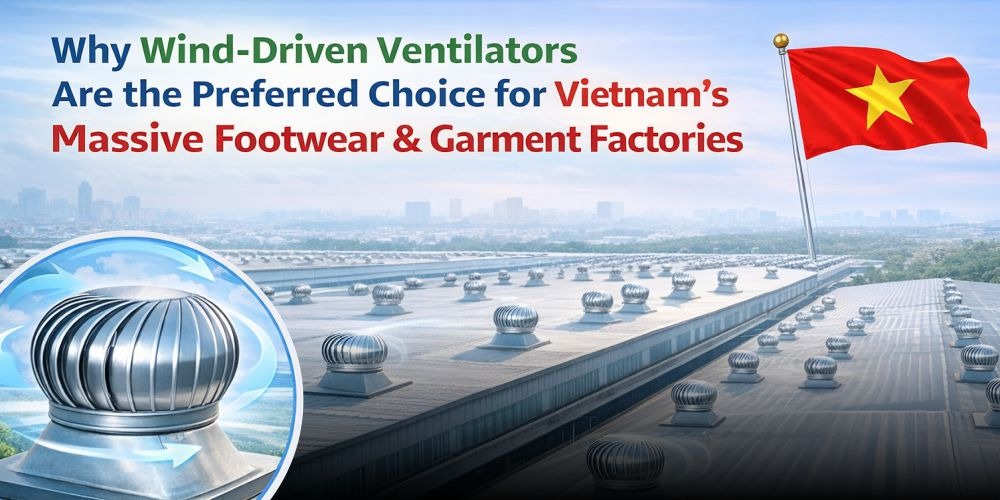
Vietnam has solidified its position as a global powerhouse for the footwear and garment industry. With massive manufacturing hubs in Binh Duong, Dong Nai, and Hai Phong, factory managers face a dual challenge: maintaining a cool, productive environment for thousands of workers while keeping operational costs low to remain competitive.
As we move through 2026, the shift toward sustainable infrastructure is no longer optional. Here is why wind-driven ventilators (turbine ventilators) have become the gold standard for Vietnam’s textile and footwear sectors
1. Combating the Tropical Humidity of Vietnam
The footwear and garment industries are highly sensitive to moisture. In Vietnam’s tropical climate, high humidity can lead to:
- Fabric Mold & Mildew: Damaging raw materials and finished exports.
- Adhesive Failure: In footwear, high humidity affects the curing process of glues.
- Machine Corrosion: High moisture levels shorten the lifespan of expensive sewing and cutting machinery.
Wind-driven ventilators provide continuous, 24/7 air exchange. Unlike electric fans that may be turned off at night, these natural ventilators extract damp, stagnant air and replace it with fresh air, ensuring the factory “breathes” even during the rainy season.
2. Zero Operating Costs: Boosting the Bottom Line
In the high-volume, low-margin world of garment manufacturing, energy bills are a significant overhead.
- No Electricity Required: Wind-driven turbines utilize the "Venturi Effect" and natural wind speeds to rotate.
- High ROI: For a factory spanning 50,000 square meters, replacing electric exhaust fans with Rise Ecovent turbine ventilators can save thousands of Dollars (USD) in annual electricity costs.
- Low Maintenance: With no motors to burn out or wiring to repair, these systems offer a "fit and forget" solution for busy plant managers.
3. Worker Productivity and the "Stack Effect"
Garment factories are labor-intensive. With thousands of workers and heat-generating machinery, the indoor temperature can quickly become unbearable, leading to “heat stress” and reduced productivity.
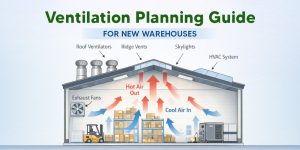
Wind-driven ventilators leverage the Stack Effect (Thermal Buoyancy). Hot air naturally rises; the turbine ventilators create a vacuum that pulls this hot air out through the roof. This creates a constant upward airflow, reducing the “perceived temperature” on the factory floor by 3°C to 5°C, keeping workers focused and efficient.
4. Meeting Global ESG and Compliance Standards
Major global brands (like Nike, Adidas, and H&M) that source from Vietnam now demand that their suppliers meet strict ESG (Environmental, Social, and Governance) targets.
- Reducing Carbon Footprint: By switching to passive ventilation, Vietnamese factories can report a significant reduction in CO2 emissions.
- Fire Safety (QCVN 06:2022/BXD): High-quality ridge and turbine ventilators help in smoke evacuation during emergencies, helping factories comply with Vietnam's strict fire safety regulations.
5. Built for the Vietnamese Monsoon
A common concern for factory owners is the heavy monsoon rain. Rise Ecovent’s advanced wind-driven ventilators are engineered with:
- Leak-Proof Design: Specialized flashing and rain-diverting vanes ensure that even during a Ho Chi Minh City downpour, your production line remains bone-dry.
- Anti-Corrosive Materials:Built using high-grade aluminum or stainless steel to withstand the salt-laden air of coastal industrial zones like Da Nang and Hai Phong.
Conclusion
For Vietnam’s footwear and garment giants, wind-driven ventilators are more than just “roof fans”—they are a strategic investment in quality control, worker welfare, and global competitiveness.
As a leading industrial ventilation manufacturer, Riseecovent provides customized airflow solutions tailored to the Southeast Asian climate. Whether you are building a new Ready-Built Factory (RBF) or retrofitting an existing warehouse, our natural ventilation systems ensure your facility stays cool, dry, and compliant.
FAQs
Yes. Even without wind, these ventilators utilize the Stack Effect (thermal buoyancy). Hot air inside the factory rises naturally; our ventilators provide a low-resistance path for that air to escape, creating a constant “chimney effect” that keeps the building cool.
Absolutely. Rise Ecovent systems are designed with specialized centrifugal vanes and anti-capillary flashing that prevents rain entry even during heavy tropical storms. Our installations are 100% weather-proof and dust-proof.
Our wind-driven ventilators operate with zero electricity and zero carbon emissions. By replacing or supplementing mechanical HVAC systems, UAE warehouses can significantly reduce their energy consumption, helping companies meet Estidama and LEED green building requirements.
This depends on the ceiling height and the “Heat Load” (machinery/workers). Typically, we recommend 1 air change every 4–6 minutes for garment/footwear plants. Our engineers provide a custom calculation based on your factory’s specific volume.
Rise Ecovent provides end-to-end support, beginning with a custom airflow audit to design the most efficient layout for your specific roof. Our lightweight ventilators are engineered for fast, seamless integration on any existing industrial roof without requiring structural changes or causing facility downtime. We provide expert technical supervision on-site in Vietnam, UAE, or Thailand to ensure a 100% leak-proof, high-performance installation.